Older, Slower, Happier: The Surprising Case for Downgrading Your Tech on Purpose

There's a certain kind of buyer's remorse that doesn't hit right away. It creeps in slowly — somewhere around the third week of owning a $1,200 phone you're still not sure how to fully use. The camera has 47 settings. The AI assistant keeps suggesting things you didn't ask for. The battery, despite all the marketing promises, still needs a top-up by 6 p.m.
For a surprisingly large and growing group of Americans, the answer to that creeping dissatisfaction isn't a new case or a better charging cable. It's going backward — on purpose.
Call it the tech downgrade. People are voluntarily swapping newer devices for older ones, trading complexity for clarity, and discovering that sometimes the smartest tech move is the one that looks the least impressive at a dinner party.
What's Actually Driving This?
The short version: modern devices have gotten really good at doing a lot of things adequately, and not so great at doing a few things exceptionally well.
Take laptops. The MacBook Pro from three years ago still runs most creative and productivity software without breaking a sweat. The newer model has more ports, a brighter screen, and a chip that benchmarks higher — but for someone writing documents, managing spreadsheets, or even editing photos, the real-world difference is almost invisible. Meanwhile, that older machine can often be found refurbished for less than half the price.
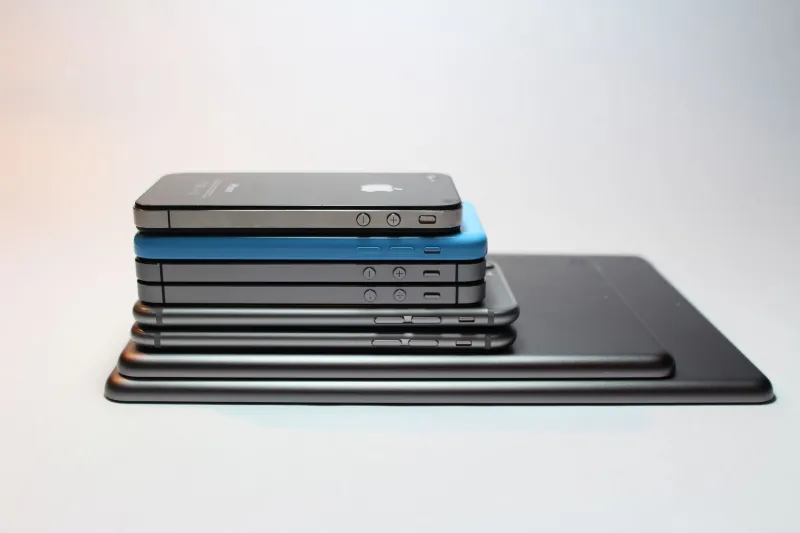
The same logic applies to smartphones. The iPhone 13 and Google Pixel 6, both now a couple of generations behind, still shoot excellent photos, run every major app, and receive security updates. People who downgraded to these from newer models consistently report one unexpected bonus: they stop fussing with their phones as much. There's less to tinker with. Less to customize. Less to break.
That's not a bug. For a lot of people, it turns out to be a feature.
The Psychological Case for Less
Psychologists have a term for what happens when you have too many options: choice overload. The more choices a device offers, the more mental energy you spend navigating them — and the less satisfied you tend to feel with whatever you ultimately choose.
Modern flagship phones are essentially choice machines. Do you want the standard photo mode or the pro mode? Should you enable adaptive refresh? Which AI summary setting do you prefer? Do you want the app to learn your habits?
Older devices sidestep a lot of this. They came from an era when the feature set was more curated, more intentional. You got what you got, and it was usually enough. Users who've made the switch describe a kind of cognitive relief — the mental equivalent of cleaning out a cluttered closet.
Marcus, a freelance graphic designer in Austin, swapped his latest Android flagship for a three-year-old model after realizing he was spending more time managing his phone than actually using it. "I stopped reading tech blogs trying to figure out how to optimize everything," he said. "Now I just use the thing. It's kind of wild how much headspace that freed up."
The Financial Math Is Hard to Ignore
Let's talk dollars, because the numbers here are genuinely striking.
The average American upgrades their smartphone every two to three years, often trading in or selling the old device. But the resale value of flagships has gotten better, and the price gap between a two-year-old device and a brand-new one has gotten wider. In many cases, you can buy a certified refurbished phone that's one or two generations old for $300–$400 less than the current model — and get 90% of the same experience.
Over a typical upgrade cycle, that's real money. Enough for a weekend trip. A few months of streaming subscriptions. Or, you know, actual savings.
Laptops tell a similar story. A refurbished ThinkPad or MacBook Air from a couple of years back, maxed out with RAM and storage, often outperforms a budget new laptop at the same price point. IT professionals have known this for years. Regular consumers are starting to catch on.
Where Older Tech Actually Wins Outright
Here's where it gets interesting: for certain use cases, older devices don't just match newer ones — they genuinely outperform them.
E-readers and tablets for reading. Older Kindle models are lighter, have longer battery life, and have a simpler interface than newer versions loaded with Audible integration and social features. If you just want to read, older is often better.
Dedicated cameras. A mirrorless camera from five years ago produces stunning images and, critically, has a physical dial layout that experienced photographers prefer over touch-heavy newer interfaces. The muscle memory is real.
Mechanical keyboards and older input devices. Ask any serious writer or coder — there's a reason people pay premiums for keyboards from a decade ago. Tactile feedback, durability, and no software to update.
Dumb TVs. Okay, this one's a little niche, but a growing contingent of people are actively seeking out TVs without smart features, pairing them with a single streaming stick they control. No ads on the home screen. No data collection. No mysterious software updates that rearrange everything.
It's Not Nostalgia — It's Intentionality
It would be easy to dismiss all of this as technophobia or boomer-coded nostalgia. But that's not what's actually happening. The people leading this movement are often young, tech-literate, and highly intentional about their choices. They're not afraid of new technology — they're just done letting new technology drive the bus.
The smartest tech users have always been the ones who ask what does this actually do for me? rather than what's the newest thing? Downgrading, in this context, isn't retreating. It's optimizing — just in a direction the marketing department didn't plan for.
There's also something quietly subversive about it. In a culture that equates newer with better and upgrades with progress, choosing to stick with something old is a small act of independence. You're opting out of the upgrade treadmill, and that choice compounds over time — in your bank account, your attention span, and your general relationship with the devices that are supposed to be working for you.
So Should You Actually Downgrade?
Not everyone should. If you're a video editor, a mobile photographer, or someone whose work genuinely depends on cutting-edge performance, the latest hardware might earn its price tag.
But if you're honest with yourself and the newest features you're using are widgets, always-on displays, and an AI that summarizes your texts — it might be worth asking whether you're paying a premium for things that are actually making your life better.
The tech downgrade isn't about settling. It's about being smart enough to recognize when you already have enough — and confident enough not to need the newest thing to prove it.