Free Update, Hidden Invoice: How Software 'Improvements' Are Quietly Draining Your Wallet
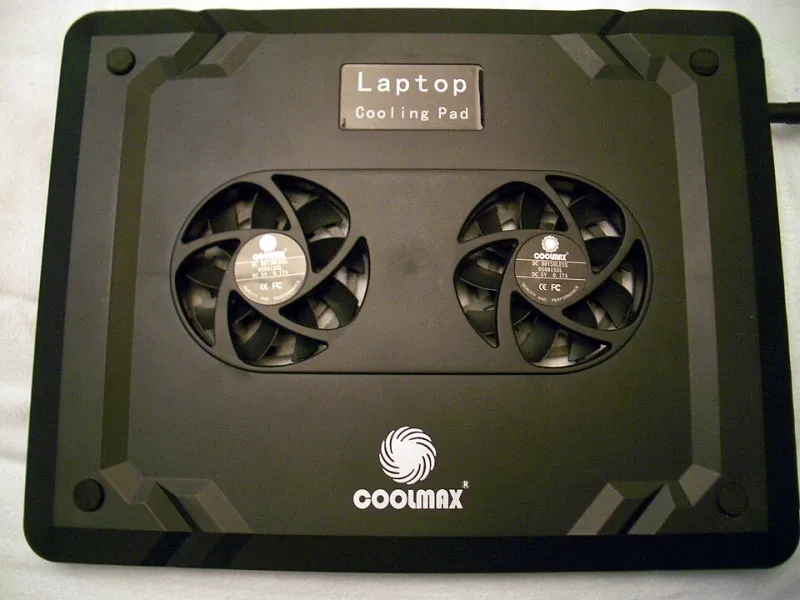
Photo: User:Littletung, CC BY-SA 3.0, via Wikimedia Commons
You tap "Install Now" on a Tuesday morning, grab your coffee, and by the time you're back at your desk, your laptop is running the latest version of whatever operating system its manufacturer just pushed out. Free. Effortless. Supposedly better.
Except now your video editing app won't launch. Your wireless printer throws a fit. And that perfectly capable machine you bought three years ago suddenly crawls through tasks it used to handle without breaking a sweat.
Welcome to tech debt — the kind that gets billed to you even though you didn't sign anything.
The 'Free' Label Does a Lot of Heavy Lifting
When Apple, Microsoft, or Google slaps a price tag of $0 on a major OS update, they're technically telling the truth. The download itself costs nothing. But the downstream consequences? Those can run into the hundreds.
Take macOS Sequoia. When Apple dropped it in late 2024, users running certain older Mac models found that key creative and productivity applications — many of which required separate paid subscriptions or one-time purchases — suddenly needed updates of their own. Some of those app updates introduced new subscription tiers. Others dropped support for workflows built around older integrations entirely.
"The update itself is free," says Marcus Webb, an independent technology economist who consults for small businesses on software procurement. "But it's essentially a key that unlocks a door to a room full of invoices."
This isn't a new phenomenon. It's just gotten more aggressive.
The Compatibility Squeeze
Here's how the cycle typically works. A major platform — say, Windows — releases an update that drops support for older processors or tightens security requirements. Peripheral manufacturers, who aren't going to spend engineering resources supporting hardware they stopped selling years ago, quietly stop issuing driver updates for the new OS. Your printer, scanner, or external audio interface becomes a paperweight.
You now have three options: find a workaround (good luck), skip the update (which creates its own security headaches), or buy new hardware that plays nice with the current software stack.
For individuals, this might mean $80 on a new printer. For a small business running a dozen machines with specialized peripherals? That math gets ugly fast.
Jennifer Castillo, who runs a graphic design studio in Austin, Texas, learned this the hard way when a routine Windows 11 update severed compatibility with the pen display she'd used without issue for years. "I had to choose between rolling back the update and losing security patches, or dropping $400 on a new tablet," she says. "I bought the tablet. But I was furious about it."
When the App Store Becomes the Chokepoint
It's not just hardware that gets caught in the crossfire. App developers who depend on platform ecosystems — the Apple App Store, Google Play, Microsoft Store — are under constant pressure to update their software to comply with new platform guidelines. Sometimes those guidelines require features that only run on newer devices. Sometimes they require rebuilding apps from the ground up.
Smaller developers often can't keep up. They abandon older app versions, leaving users stranded on outdated software or forced to migrate to a competitor's product — often one with a subscription model attached.
This is where the term "tech debt" gets really interesting. In software development, tech debt refers to shortcuts taken during coding that accumulate into bigger problems later. But for consumers, tech debt means something slightly different: it's the deferred cost of staying inside a platform's ecosystem. Every update you accept is another rung on a ladder that eventually leads to a purchase.
The Hidden Psychology of 'Free'
There's a reason companies don't frame updates as "this will eventually require you to spend money." The word "free" functions as a psychological reset — it makes the immediate decision feel consequence-free, even when the long-term trajectory is anything but.
"Platform companies have become very sophisticated about separating the moment of consent from the moment of cost," Webb explains. "You say yes to the update in September. You buy the new laptop in March. In your head, those are two completely different decisions. But they're not."
This temporal gap is by design. It creates plausible deniability for the company ("we never made you upgrade your hardware") while still engineering the conditions that make upgrading feel necessary or inevitable.
What Smarter Users Are Actually Doing
Some power users have started treating major OS updates the way savvy investors treat volatile assets — with a wait-and-see approach. Rather than installing updates the day they drop, they hold off for 30 to 60 days, monitoring forums and communities like Reddit's r/MacOS or r/Windows11 for early reports of compatibility issues.
Others are getting more deliberate about the software they depend on professionally. Before accepting a major update, they audit their critical tools — checking developer release notes and support pages to confirm compatibility before hitting install.
A growing contingent is also pushing back on the update-or-else framing by choosing software with longer support windows. Some enterprise-focused tools explicitly guarantee compatibility across multiple OS generations, which is increasingly being treated as a feature worth paying for upfront.
The Bigger Conversation We're Not Having
The real issue here isn't that software evolves. It should. The issue is that the cost of that evolution has been quietly offloaded onto consumers without their informed consent.
When a car manufacturer releases a software update that requires you to buy a new engine, we'd call that a scandal. When a tech company does the functional equivalent through a chain of compatibility decisions, we call it progress.
There's a growing push — particularly in the EU, but with some momentum in US tech policy circles — for clearer disclosure around software support windows and compatibility guarantees. The idea is simple: if a company knows that an update will break support for devices less than five years old, they should have to say so upfront.
Until that kind of transparency becomes standard, the smartest move is to treat every "free" update notification with a healthy dose of skepticism. Read the fine print that doesn't technically exist. Ask what the update is actually asking of you — not just today, but six months from now.
Because in the software economy, "free" is almost always a starting price, not a final one.